Investors, with or without experience, make mental mistakes all the time. And to make matters worse, we ourselves often consciously or unconsciously shrink away from the important task of analyzing those mistakes. In a book that we strongly recommend to serious investors, The Little Book of Behavioral Investing: How not to be your own worst enemy, author James Montier pointed out that, if we want to be better investors, we have to carefully analyze our own mental flaws.
Seth Klarman, in his 2011 letter to Baupost investors, wrote: “Understanding how our brains work—our limitations, endless mental shortcuts, and deeply ingrained biases—is one of the keys to successful investing.” He stressed a few key mental errors made by both individual and institutional investors. Here are some mental errors that we should all watch out for:
Overreacting to the latest news
Klarman had this to say about overreacting: “Investors emotionally pile in on good news and rush for the exits on bad news, causing prices to overshoot.” We tend to act in the heat of the moment and make quick buy and sell decisions without any significant thought. The average investor’s mindset, according to Klarman, is this: “Most of us like a stock more when it has risen in price and less when it has fallen.” If a company reports an increase in earnings, our brains might feel something golden and jump on the bandwagon. Tech giant Intel (INTC) recently reported increased earnings for the 1st quarter of 2012. Does that mean we should buy it right away?
What we should do is to reverse our thinking about the latest hot news and look for reasons why a company like Intel may not be a good investment. As Sir John Templeton once noted, “The time of maximum pessimism is the best time to buy and the time of maximum optimism is the best time to sell”. So when the stock market is down, it is time to look for opportunities, not to sit back and do nothing. Klarman suggests a common error when searching for investment opportunities: “The herd can irrationally lose sight of the underlying assets and long-term prospects of a business when it focuses on price movements.”
Looking in the rearview mirror
As Klarman states, “Our expectations about future events are distorted by past experience.” When we think too much about the past, we become more hesitant to take risks. And Klarman further states: “Actions that seemed prudent in foresight can look horribly negligent in hindsight.” We likely fail to overcome the extreme fear that prevented smart decision-making. Fear, particularly upon suffering a loss, causes people to ignore bargains in the market. Banking businesses like Citigroup (C) were a bargain following the low point of the economic recession. But did anyone bother to look at Citigroup’s future outlook?
People in the market today are scared due to their memories of the recent financial crisis. However, “Protective actions, whether by individuals or governments, tend to be designed to prevent a recurrence of the worst such disaster previously experienced, ” wrote Klarman. We tend to become too cautious in trying to prevent the worst of such disasters. We tend to look back at the worst scenario that may not happen again. In Montier’s words, we become afraid of the big, bad market.
Focusing on results rather than processes
Klarman makes the ultimate point about focusing less on results: “A good result says nothing about whether the process involved was a good one and whether or not the success might be replicable.” Montier takes this a step further: “You could have a good process but a bad outcome. Or you could have a bad process but a lucky outcome. The bad process/lucky outcome combination is worse because it sets investors up for a higher likelihood of failure in the future.” Klarman explained: “The focus on benefits lessens our concern about what could go wrong.” The biggest mistake we make is not remembering our past mistakes. With a good outcome, we are less likely to remember and analyze our weaknesses.
Klarman notes: “Those who have been lucky are almost never punished for having taken too much risk.” With good results that may turn out to be pure luck, we are quick to praise the positive outcome on genuine skill that we don’t really have.
Letting intuitive hunches take over rationality
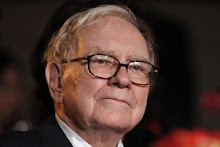
Klarman stressed the importance of being a rational thinker: “It is good to buy investment bargains, but it is far better if you know why they are bargain-priced.” In essence, it is important to focus on logic and rationality. Look no further than Warren Buffett, whose investment logic is to buy businesses with good-to-superb underlying economics run by reliable people.
Investor irrationality comes from the two systems in his or her brain: an intuitive brain, System One, and an analytical brain, System Two. Our intuitive brain makes quick, unconscious decisions on the spot. Our analytical brain takes more time to process the information and formulate solutions. This is how our brains tend to work, according to Klarman: “When System One substitutes an easier question for a harder one, it is easy to make mistakes.” The best investors are the ones with a strong analytical brain.
We, by human nature, think we know the difference between right and wrong without extensive analysis, if we have been around the business for a long time. So we come to believe that our decisions are always rational no matter what. We need to always be conscious of whether we are making rational decisions or not. Klarman wrote: “No one should be confident that they are immune from irrational behavior from time to time.”
- By MATTHEW INDYKE and BRIAN ZEN
About the author:
SUPERINVESTOR.net is an investment research co-op for next-generation super investors, analysts, and advisors. Visit Mathew Indyke and Brian Zen's Website